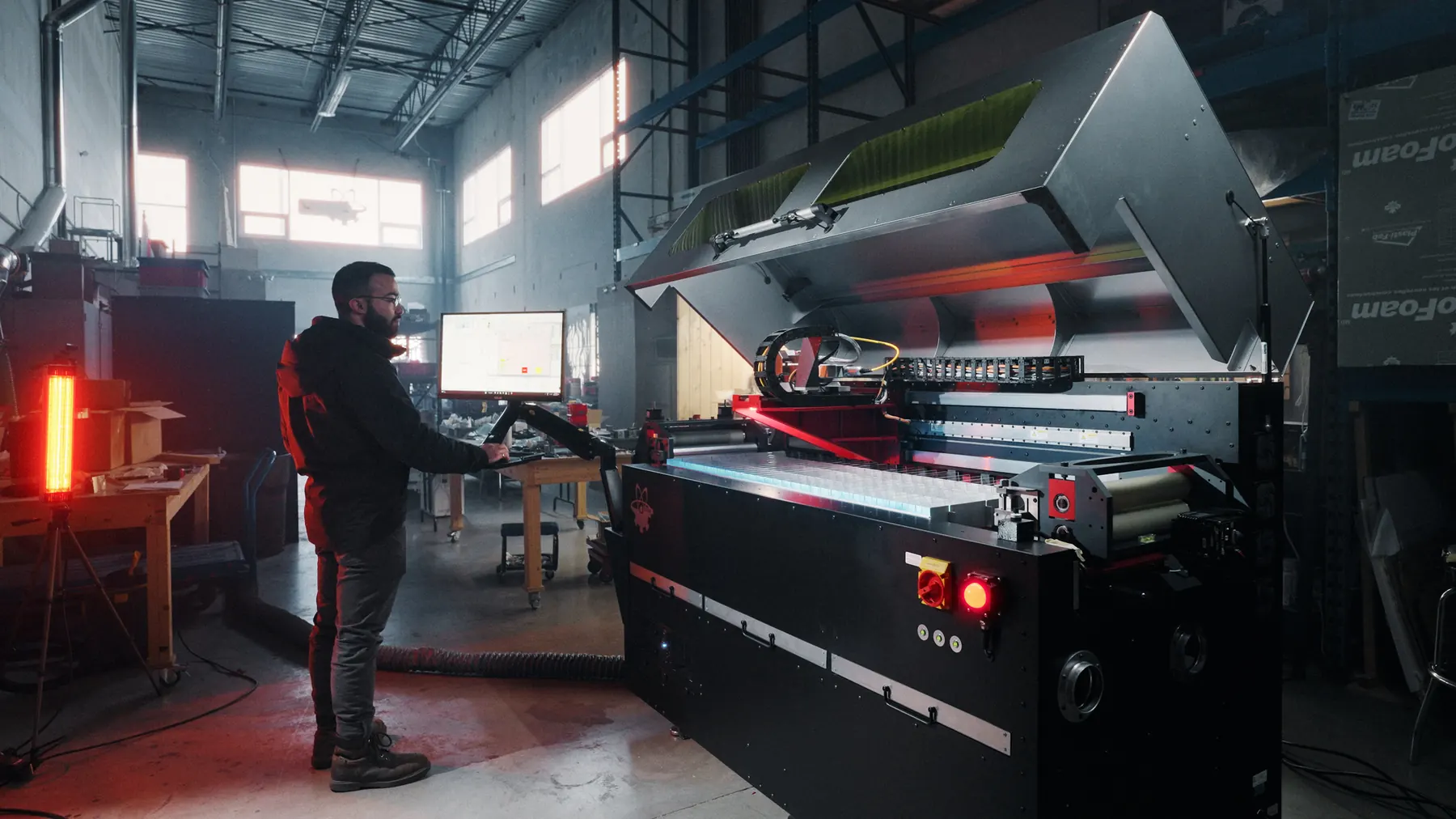

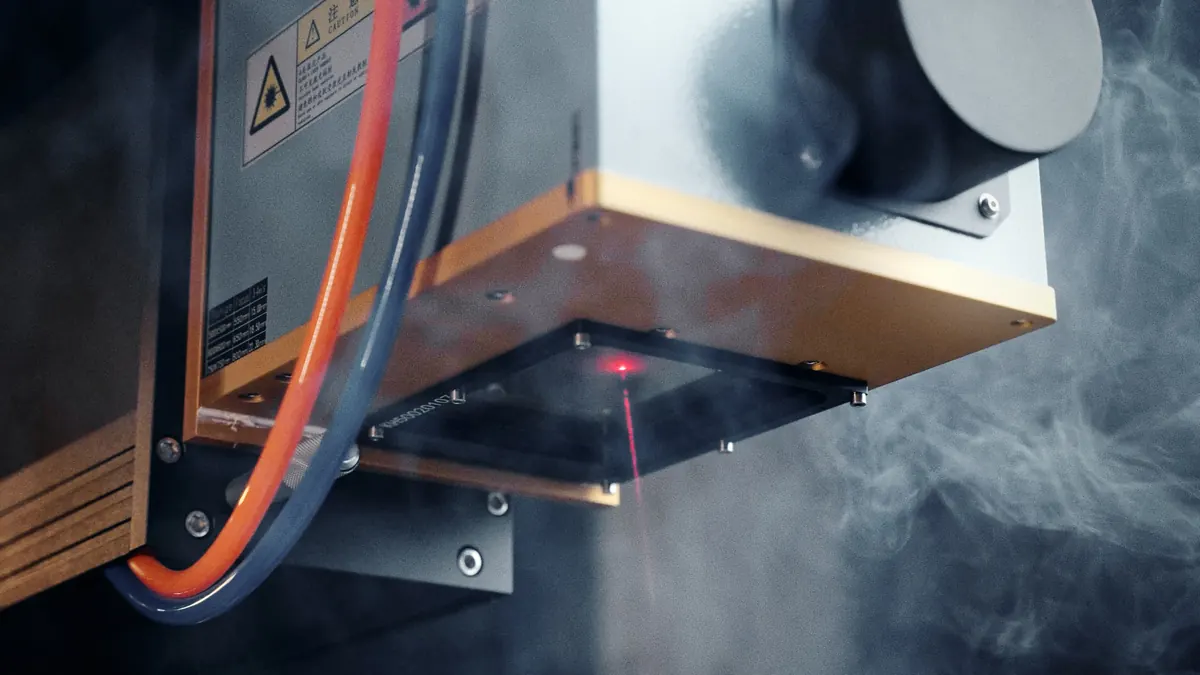
Every laser process starts with one question: will the material absorb the beam? Wavelength decides that, so it's the first thing we look at when we design a machine.
Fiber lasers (about 1 µm)
The workhorse for metals. Fiber lasers cut, weld and mark steel, stainless, aluminum, copper and brass efficiently, need little maintenance and are easy to route through a machine. We integrate IPG Photonics fiber sources from tens of watts for marking up to kilowatts for cutting and welding.
UV lasers (about 355 nm)
For delicate work. UV light is absorbed by many plastics and films that a fiber laser would pass through or burn. The small spot and "cold" process make UV the choice for micro-machining, medical components and fine marking with minimal heat damage.
CO₂ lasers (about 10.6 µm)
The best fit for organic and non-metal materials: wood, acrylic, leather, textiles, paper and glass marking. CO₂ galvo systems mark very fast, which is why we used one for automated glove and barrel marking.
Beyond the source
- Galvo or gantry: galvo scanners move the beam with mirrors for high-speed marking; gantries move the head for large-area cutting.
- Pulse length: nanosecond, picosecond and femtosecond pulses trade speed for precision and heat input.
- Safety and certification: enclosures, interlocks and fume extraction are part of the design, and our custom machines are built for UL and cUL certification, with CSA available on request.
Not sure which source fits your part? Send us a sample. We'll tell you what works before anyone designs a machine.