
A laser concentrates a lot of energy into a very small spot. What that energy does depends on how it's delivered: how much power, for how long, over how small an area, and with what gas around it. Cutting and welding are two ends of the same dial.
Cutting: melt it and blow it away
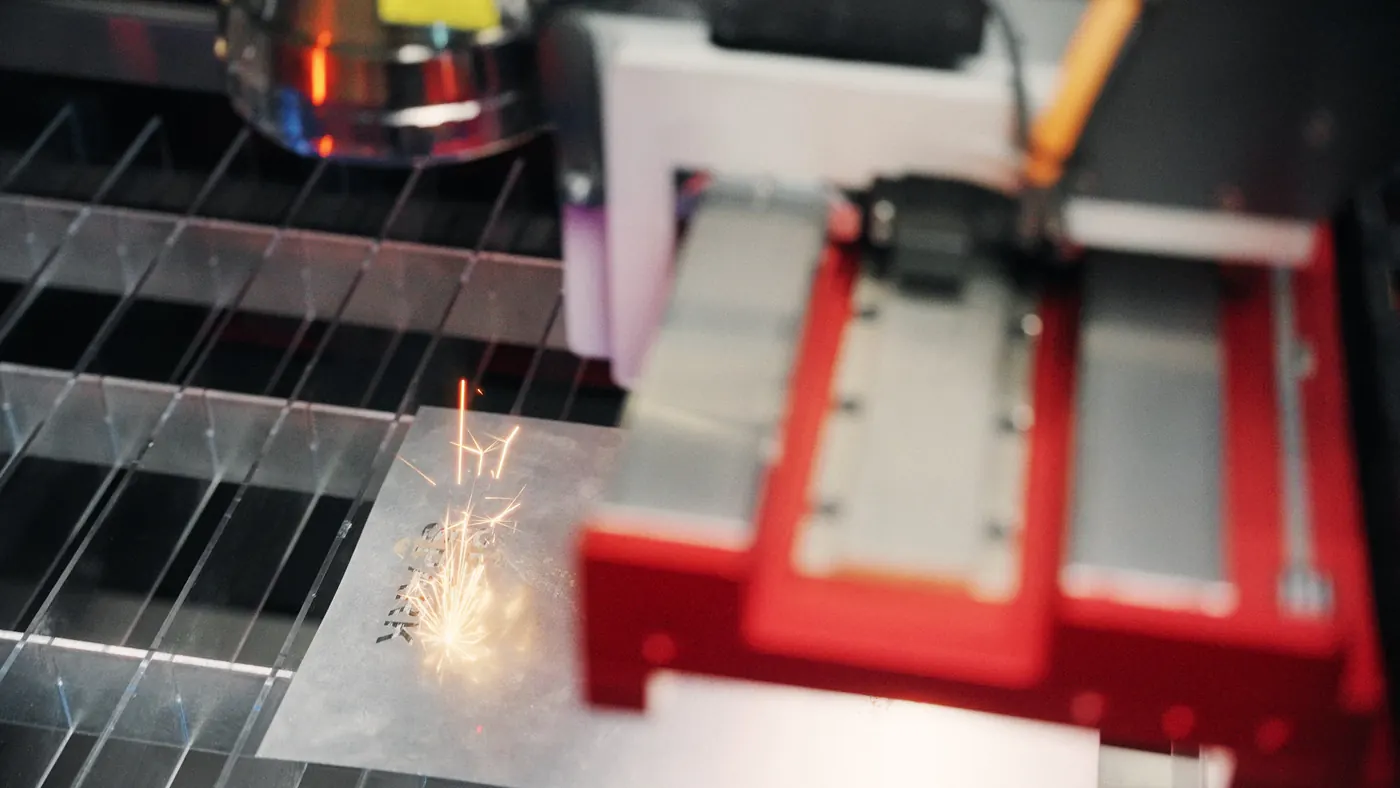
In laser cutting, a focused beam heats a narrow path through the material until it melts or vaporizes. An assist gas, usually nitrogen or oxygen, blows the molten material out of the cut. Nitrogen gives clean, oxide-free edges on stainless and aluminum; oxygen adds energy from combustion and cuts thicker mild steel faster.
- Fiber lasers dominate metal cutting. Their short wavelength is absorbed well by metals, and the beam travels through a flexible fiber, which makes them easy to integrate into automation.
- CO₂ lasers are still the best choice for many non-metals: wood, acrylic, leather, fabric and paper.
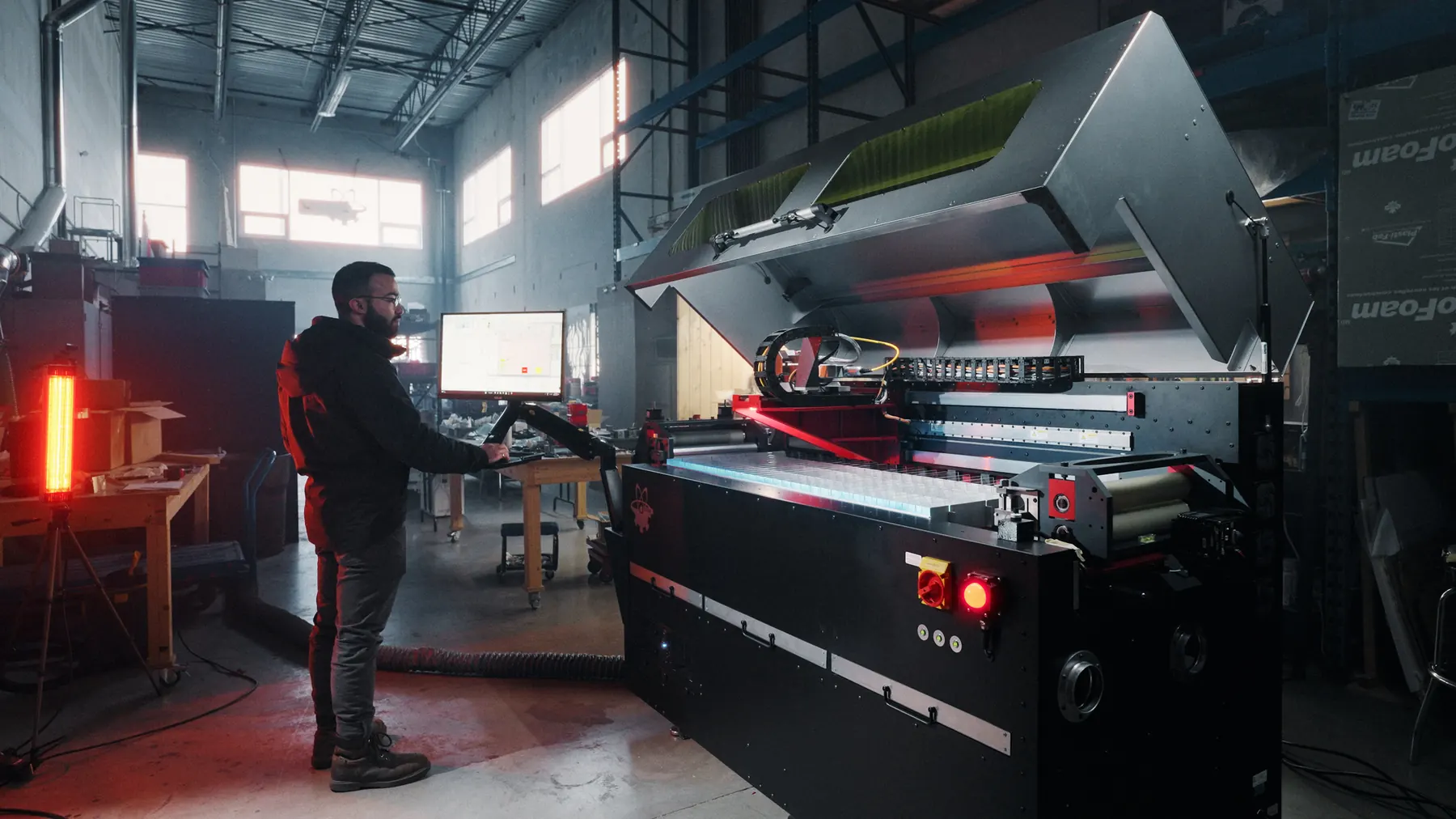
- Thin foils, like the metal sheets used in batteries, need low heat input, precise tension control and steady handling. That's why we build roll-to-roll stations around the laser rather than just a cutting bed.
Welding: melt it and let it fuse
In laser welding, the goal is to melt two surfaces together without removing material. The beam is often slightly defocused or wobbled to widen the melt pool, and shielding gas protects the weld from oxidation. Because the heat is so concentrated, laser welds are narrow, strong and cause very little distortion, which is ideal for precision parts and thin materials.
What it means for your machine
The laser source is only part of the result. Fixturing, part positioning, gas delivery, fume extraction and process monitoring decide whether a process works once or every time. When we design a cutting or welding cell, we test on your material first, then build the handling and controls around the process window that works.